Tech Notes
VitalTrack vs. Other Brand Devices: Heart Rate Comparison (2)
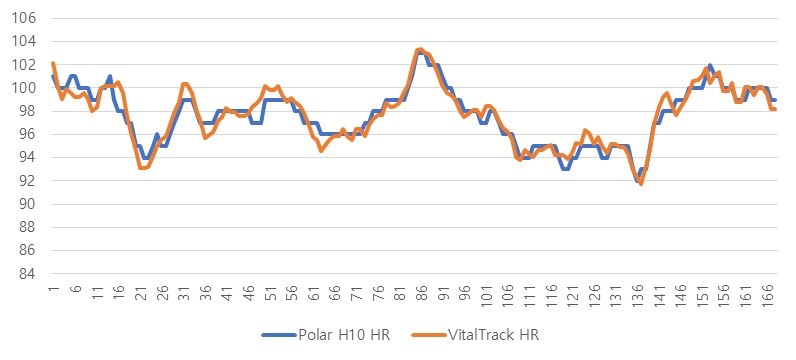
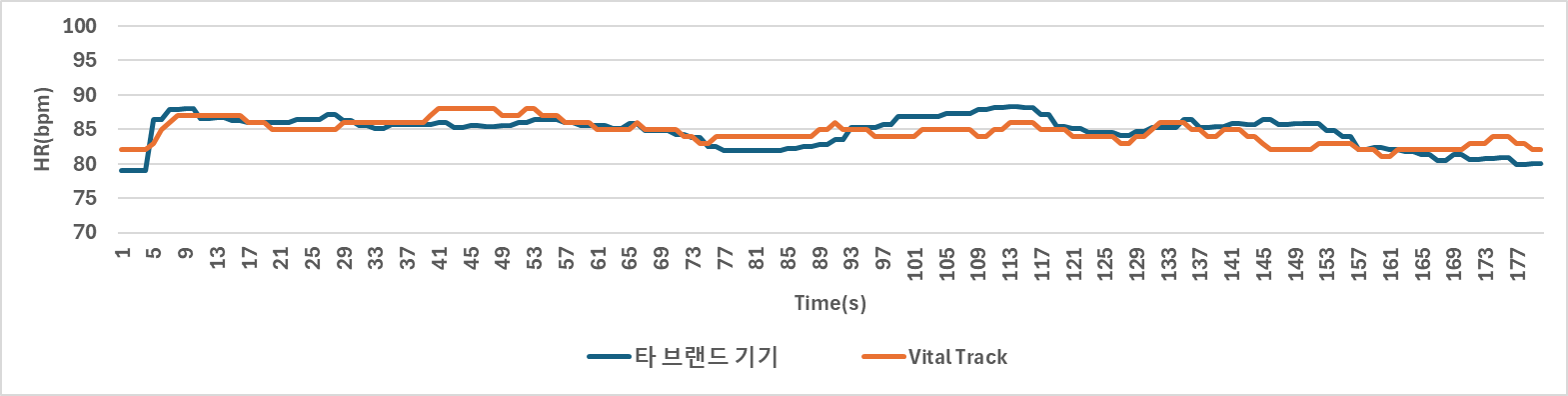
In this post we compare heart rate data from VitalTrack and a heart rate device from another brand while walking. In the previous post we compared heart rate data from the two devices at rest; this time we will look at how accurately VitalTrack measures heart rate while the wearer is walking.
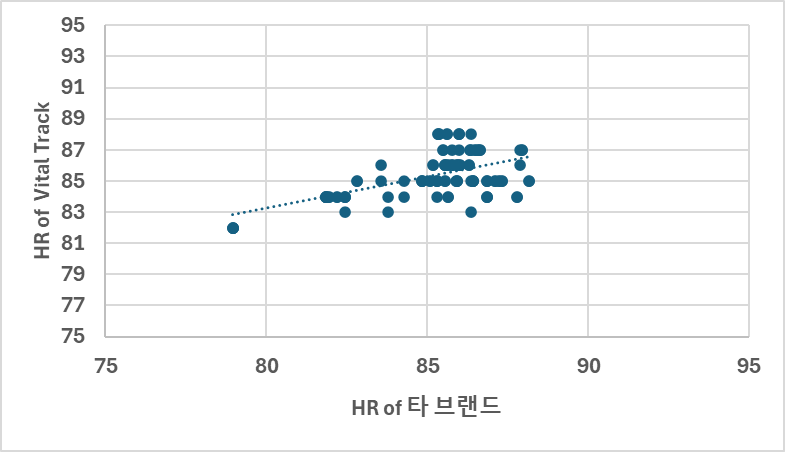
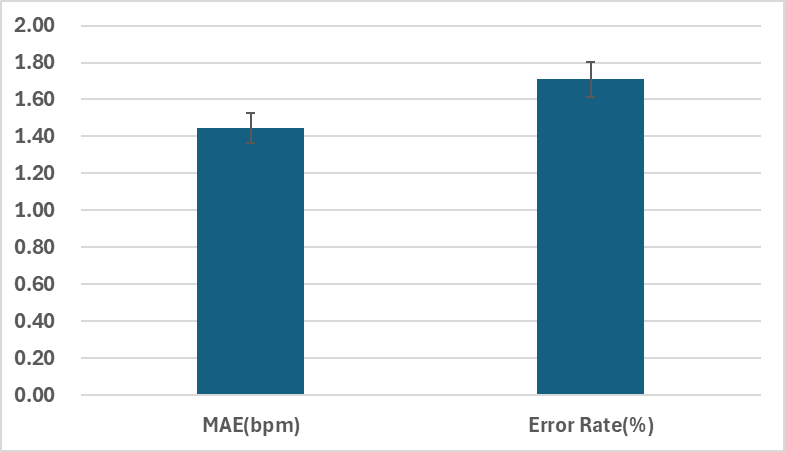
Three metrics were used for the comparison: the correlation coefficient (R), MAE (mean absolute error), and error rate.
Why is measuring heart rate while walking difficult?
During exercise such as walking, heart rate changes continuously. The heart beats faster, and movement of the wrist or chest can make heart rate measurement harder. When there is movement like this, it is difficult for a device to collect accurate data. Wrist-worn devices in particular can find measurement harder because of hand movement.
How was the data collected?
The experiment was carried out as follows:
Participants: participants walked for three minutes.
Device placement: the other brand's device was attached to the chest and measured heart rate from the heart's electrical signal, while VitalTrack was worn on the wrist and recorded heart rate from changes in blood flow.
Measurement duration: each run lasted three minutes, with heart rate recorded at one-second intervals.
Data analysis: based on the collected data, the correlation coefficient (R), MAE, and error rate were calculated to compare the performance of the two devices.
Analysis of the walking data
While walking, heart rate changes continuously and movement makes measurement more difficult. This makes it important to examine how accurately each device can track heart rate.
Correlation coefficient (R): this value indicates how similar the data from the two devices is. The higher the correlation coefficient (R), the closer VitalTrack's heart rate data is to that of the other brand's device used as the reference.
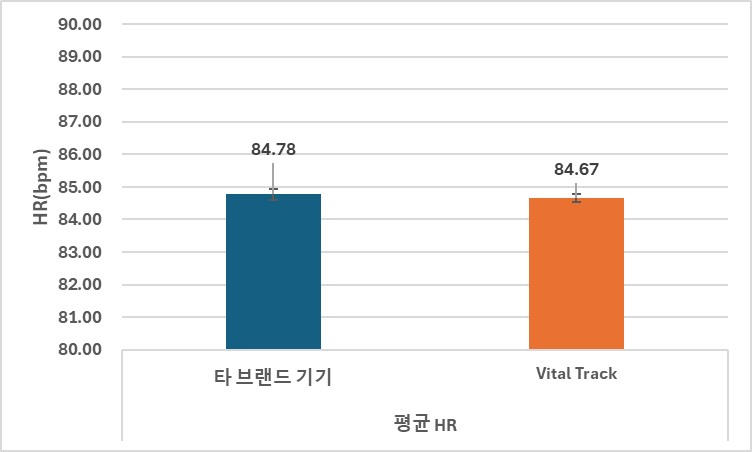
MAE (mean absolute error): this indicates the average difference between the heart rate data of the two devices. The lower the value, the more similar the data from the two devices.
Error rate (%): this shows the discrepancy between the two devices' data as a percentage. The lower the value, the more accurate the heart rate data provided even while walking.
Conclusion
Comparing heart rate data collected while walking, we were able to confirm that VitalTrack measures heart rate with accuracy comparable to the other brand's device. During exercise such as walking, heart rate varies considerably and there is a great deal of wrist movement, so capturing that data accurately matters. This comparison shows that VitalTrack provides reliable data not only at rest but also in situations involving movement.
We will be back with the next post. If there is an experiment you would like to see, please let us know in the comments.